



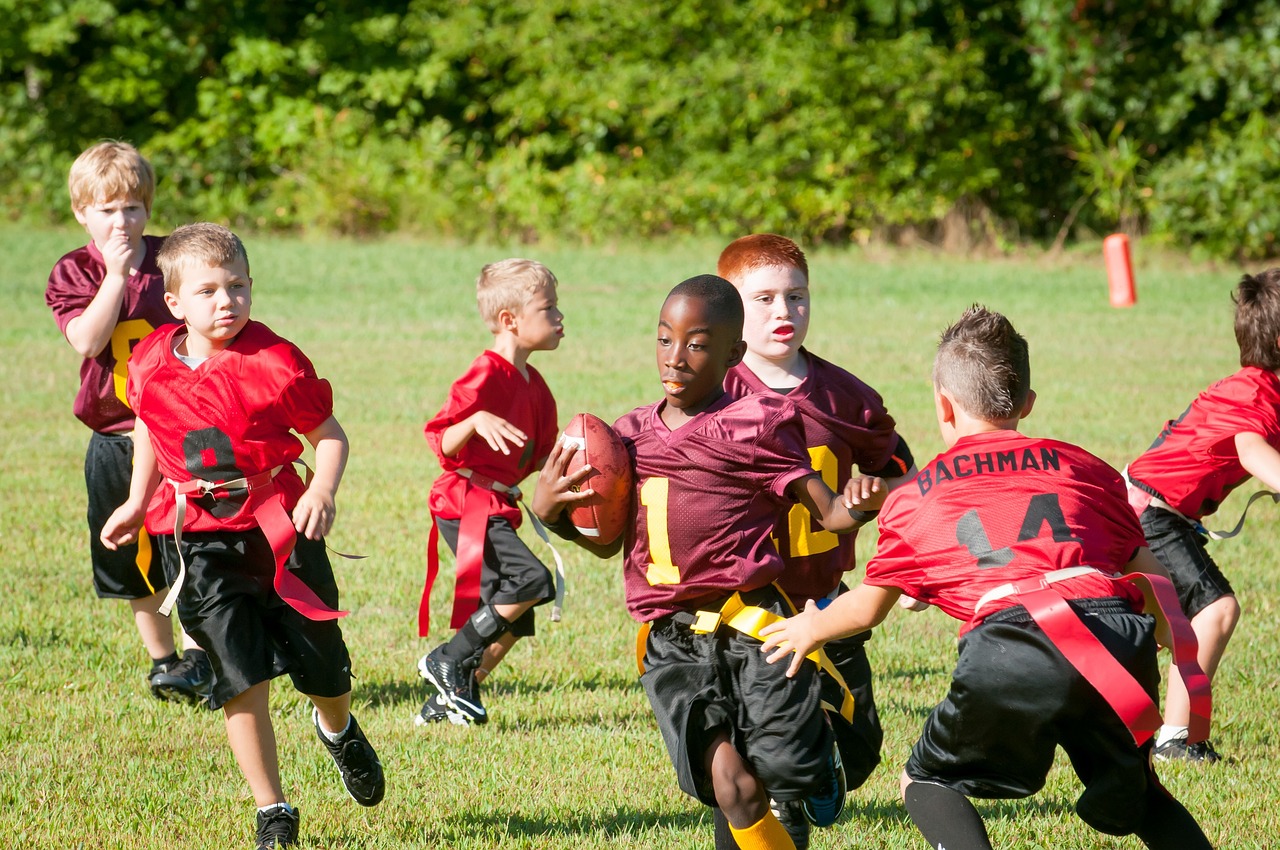
In the fast-paced world of flag football, understanding the intricacies of scoring and downs is essential for players and parents alike. While the basic objective remains the same – to advance the ball down the field and score touchdowns – flag football introduces unique rules and strategies that differentiate it from traditional tackle football. In this article, we’ll delve into the nuances of scoring and downs in flag football, empowering parents to support their child’s understanding and enjoyment of the game.
- The Fundamentals of Scoring:
- Scoring in flag football occurs when a team successfully crosses the opponent’s goal line with possession of the ball, resulting in a touchdown. Unlike traditional football, there are no field goals or extra point attempts in flag football, simplifying the scoring process.
- Touchdowns are typically awarded a fixed number of points based on league regulations, with variations depending on league preferences. Some leagues may implement additional scoring systems, such as point-after-touchdown (PAT) attempts or two-point conversions, to add strategic depth to the game.
- Unraveling the Mystery of Downs:
- Downs in flag football function similarly to traditional football, with teams afforded a series of attempts, or downs, to advance the ball down the field. Each set of downs consists of a predetermined number of attempts to gain a specified distance, typically 10 yards, known as the “first down marker.”
- Teams must strategically plan their plays to maximize their chances of success on each down, balancing between short gains to maintain possession and longer plays to achieve significant yardage gains. Turnovers on downs occur when a team fails to advance the ball past the first down marker within the allotted attempts, resulting in a change of possession.
- Mastering Offensive and Defensive Strategies:
- Offensively, teams aim to exploit defensive vulnerabilities and create opportunities for scoring by effectively executing plays and exploiting mismatches. Understanding the importance of play calling, route running, and ball distribution is crucial for offensive success in flag football.
- Defensively, teams strive to prevent the opposing team from advancing the ball and scoring by effectively pulling flags, disrupting passing lanes, and communicating effectively on the field. Developing sound defensive techniques and maintaining discipline can help teams thwart offensive efforts and secure victories.
- Embracing Strategic Play Calling:
- Strategic play calling lies at the heart of successful flag football teams, with coaches and players working collaboratively to devise game plans tailored to their strengths and weaknesses. By analyzing the opposing team’s tendencies and adjusting their strategies accordingly, teams can gain a competitive edge and maximize their chances of success on the field.
- Parents play a crucial role in supporting their child’s understanding of strategic play calling, encouraging them to communicate effectively with teammates, adapt to changing game situations, and maintain composure under pressure. By fostering a strategic mindset, parents can empower their child to make informed decisions and contribute to their team’s success on the field.
Conclusion: As parents support their child’s flag football journey, understanding the nuances of scoring and downs serves as a foundation for their appreciation and enjoyment of the game. By immersing themselves in the intricacies of flag football strategy and tactics, parents can provide invaluable guidance and encouragement, empowering their child to excel on the field and embrace the challenges and triumphs of organized flag football.
Sayvion Fullerton’s Playbook for Success in Scarborough Flag Football – Learn from the Best